How to Measure Your Large Dog Before Buying an Elevated Bed
Choosing the right elevated dog bed starts with measuring your dog correctly. Large breeds need enough space to stretch, turn around, and rest comfortably. A bed that is too small may restrict natural sleeping positions, while an unnecessarily large option may take up more space than needed.
Elevated dog beds are a practical choice for many large breeds because they feature a raised sleeping platform supported by a frame. However, selecting the correct size is essential for comfort, stability, and everyday use.
At Magnificent Pups, we understand that every dog has different size and sleeping requirements. In this guide, we’ll explain how to measure your large dog before buying an elevated bed and what dimensions to consider when comparing different models.
1. Why Is Measuring Your Dog Important?
Many pet owners choose dog beds based on general labels such as large, extra-large, or giant. However, these categories can vary between manufacturers.
Two dogs from the same breed may also have different body lengths and sleeping habits.
Measuring your dog helps you:
Choose a sleeping platform with enough space.
Allow comfortable stretching and movement.
Avoid purchasing a bed that is too small.
Compare product dimensions accurately.
Select a suitable bed for your dog’s body weight.
Make a more informed purchasing decision.
A few minutes spent measuring can help you find a bed that better suits your dog’s everyday needs.
2. What Do You Need Before Measuring Your Dog?
Before starting, prepare a flexible measuring tape and find a comfortable area where your dog can lie down naturally.
You may also need someone to help keep your dog relaxed during the process.
Follow these simple tips:
Measure your dog when it is calm.
Allow your dog to lie in its usual sleeping position.
Keep the measuring tape straight without pulling it tightly.
Record each measurement for comparison.
Repeat measurements if your dog moves during the process.
Try to measure your dog while it is relaxed rather than immediately after exercise or playtime.
3. Measure Your Dog's Body Length
Body length is one of the most important measurements when choosing an elevated dog bed.
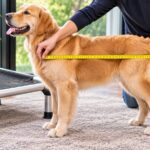
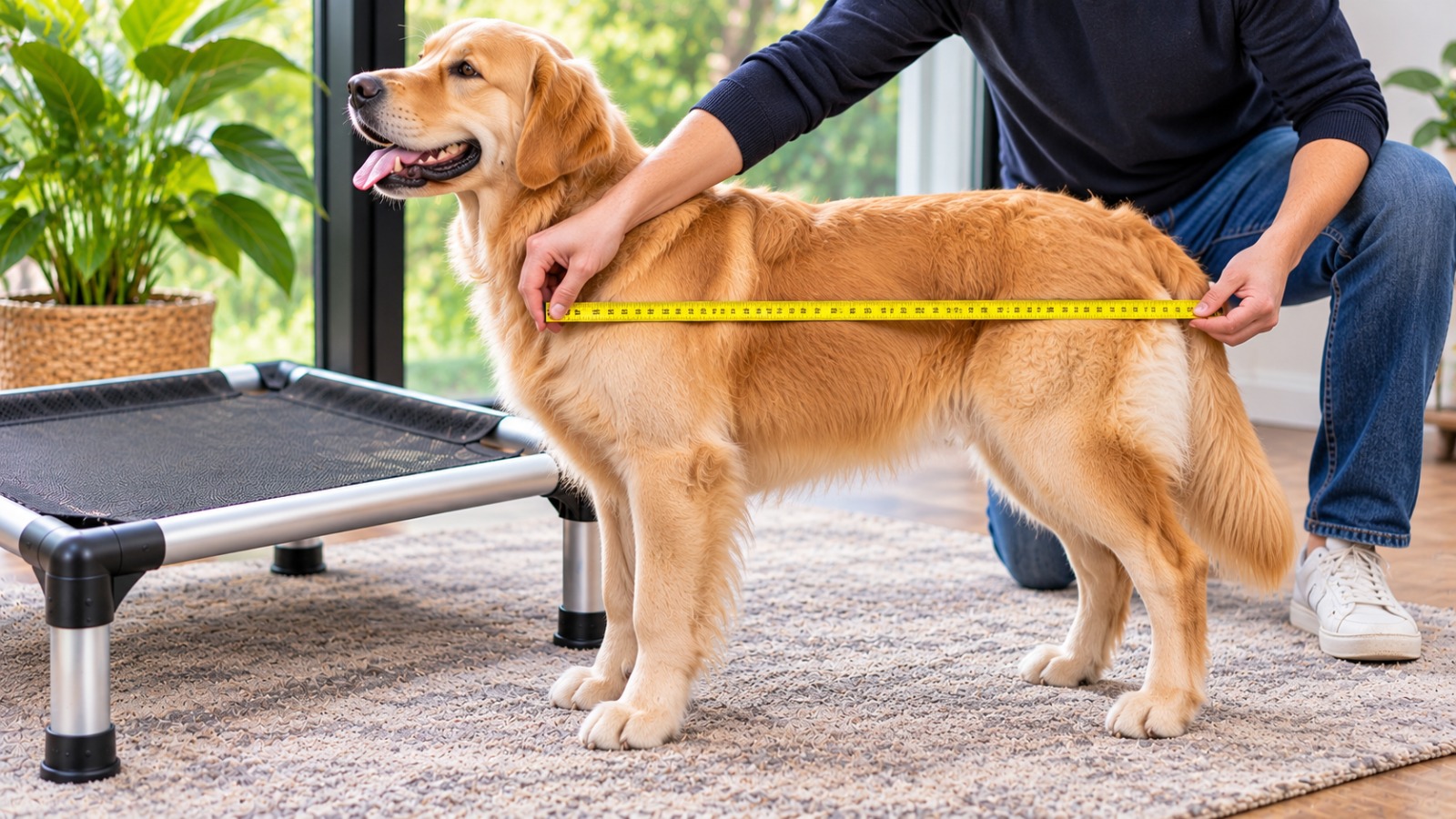
Ask your dog to lie down naturally on a flat surface. Measure from the tip of the nose to the base of the tail.
This gives you a general idea of the length required for your dog’s resting space.
However, do not select a bed that matches this measurement exactly. Your dog needs additional room to stretch and change positions comfortably.
4. Measure Your Dog's Sleeping Width
Length alone does not determine the correct bed size. Your dog’s width is equally important, particularly for broad-chested breeds.
Measure the space your dog occupies while lying on its side or in its preferred sleeping position.
Pay attention to the distance across the body, including the legs when they are extended.
This measurement helps you choose a platform that provides enough room without restricting movement.
5. Measure Your Dog While Fully Stretched Out
Some large dogs prefer curling up, while others enjoy sleeping with their legs extended.
If your dog regularly stretches out, measure the full space it occupies in that position.
This is especially important for breeds with longer bodies or large frames.
Allow additional space around the measurements so your dog can move naturally without its legs hanging over the edges.
6. Consider Your Dog's Weight
The sleeping platform dimensions are only one part of choosing the right elevated dog bed. You should also consider your dog’s body weight.
A spacious platform may still be unsuitable if the supporting frame does not have an appropriate weight capacity.
Before purchasing, check:
Your dog’s current weight.
The manufacturer’s recommended weight capacity.
The supporting frame construction.
The stability of the legs and connections.
The sleeping platform’s material and attachment points.
Always follow the manufacturer’s stated weight limit. Do not assume that every large or extra-large elevated bed can support the same amount of weight.
7. Understand the Difference Between Overall Bed Size and Sleeping Surface
One common buying mistake is confusing the overall frame dimensions with the actual sleeping area.
An elevated dog bed may have a larger external frame because of its supporting legs and side structure. However, the usable platform may be smaller.
For example, a bed with a long external frame may provide a shorter fabric sleeping surface.
When comparing products, check both measurements:
Overall dimensions: The total length, width, and height of the assembled bed.
Sleeping surface dimensions: The actual area available for your dog to lie down.
Always use the sleeping surface measurements when comparing the bed with your dog’s body size.
8. How to Choose the Right Elevated Bed Size for Popular Large Breeds
Different large breeds have different body shapes and sleeping preferences. Use the following guidance as a starting point.
| Dog Breed | Important Size Considerations |
|---|---|
| Labrador Retriever | Enough room to stretch and change positions |
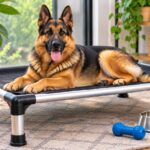
| German Shepherd | Adequate length and width |
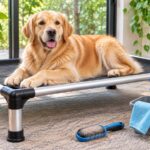
| Golden Retriever | Spacious sleeping platform |
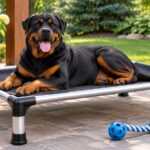
| Rottweiler | Sufficient width for a broad body |
| Doberman | Longer sleeping surface |
| Great Dane | Extra-large platform and suitable weight capacity |
| Bernese Mountain Dog | Spacious platform and stable construction |
These are general considerations rather than fixed size recommendations. Individual dogs can vary significantly, even within the same breed.
Measure your own dog before selecting a bed.
9. Why Frame Height Also Matters
When buying an elevated dog bed, consider the platform height in addition to its length and width.
A bed that is too high may be difficult for some dogs to access. This is particularly important for puppies, senior dogs, and pets with mobility difficulties.
Consider these factors:
Your dog’s leg length.
Its ability to climb onto raised surfaces.
Its age and mobility.
The height of the sleeping platform.
Whether it can step down comfortably.
For dogs with joint pain or mobility problems, consult a veterinarian about suitable bed height and sleeping arrangements.
10. Why Consider Elevated Aluminum Dog Beds for Large Dogs?
Once you know your dog’s measurements, the next step is choosing a suitable frame and sleeping surface.
Elevated aluminum dog beds are worth considering for several practical reasons.
Strong and Relatively Lightweight Frame
Aluminum combines useful strength with relatively low weight. A properly designed frame can provide a stable supporting structure while remaining easier to move during cleaning or rearranging.
However, overall strength depends on the aluminum grade, frame design, joints, and manufacturing quality.
Better Airflow Around the Sleeping Area
The raised platform creates open space underneath the bed, allowing air to circulate around the resting area.
When combined with breathable mesh, this design can help reduce trapped warmth around the sleeping surface.
Keeps Dogs Above Direct Floor Contact
Elevated beds separate dogs from direct contact with the floor. This can be useful when the floor is dusty or slightly damp.
The open space underneath also makes cleaning the surrounding area more convenient.
Practical Everyday Maintenance
Many elevated designs provide convenient access to the floor underneath. Depending on the platform material, the sleeping surface may also be removable or washable.
Always follow the manufacturer’s cleaning instructions.
11. Common Measuring Mistakes to Avoid
Even small measuring mistakes can result in choosing an unsuitable bed.
Avoid these common problems:
Measuring only the body length: Your dog’s width and stretched sleeping position also matter.
Ignoring extra space: A platform that matches your dog’s exact measurements may feel restrictive.
Using breed labels alone: Dogs within the same breed can have different body sizes.
Confusing frame size with platform size: Always check the actual sleeping surface.
Ignoring weight capacity: A correctly sized bed must also support your dog’s weight.
Overlooking platform height: Make sure your dog can access the bed comfortably.
Taking accurate measurements helps you compare products more confidently.
12. Final Checklist Before Buying an Elevated Dog Bed
Before placing your order, review this checklist:
Measure your dog’s body length.
Measure its sleeping width.
Check the space occupied when fully stretched.
Record your dog’s current weight.
Compare measurements with the usable sleeping platform.
Check the manufacturer’s weight capacity.
Review the frame construction and joint quality.
Consider the platform height.
Check cleaning and maintenance instructions.
This simple process can help you choose a more suitable elevated dog bed.
Why Choose Magnificent Pups for Elevated Dog Beds?
Choosing an elevated dog bed involves more than selecting a size. You should also consider frame construction, platform material, weight capacity, and everyday maintenance.
Magnificent Pups focuses on elevated dog beds for pet owners looking for practical raised sleeping solutions.
Our aluminum elevated dog bed options are worth exploring if you want a supporting metal frame, a raised sleeping platform, and convenient access underneath for cleaning.
Whether you have a Labrador Retriever, German Shepherd, Rottweiler, Golden Retriever, or another large breed, accurate measurements can help you find a suitable resting space.
Explore Magnificent Pups’ elevated dog bed collection and choose a size that matches your dog’s measurements and everyday needs.
Frequently Asked Questions
How do I measure my large dog for an elevated bed?
Measure your dog from the nose to the base of the tail while lying down. Also measure its sleeping width and the space it occupies when fully stretched. Compare these measurements with the actual sleeping platform.
Should an elevated dog bed be bigger than my dog?
Yes. The sleeping surface should provide additional room so your dog can stretch, turn, and change positions comfortably. Avoid choosing a platform that matches your dog’s exact body measurements.
How do I know what size bed my Labrador needs?
Measure your Labrador’s length and width while resting. Compare the measurements with the usable sleeping area and check the manufacturer’s weight capacity.
Is the overall frame size the same as the sleeping surface size?
No. The overall frame dimensions may include the legs and supporting structure. The sleeping surface is the actual area available for your dog to lie down.
Does my dog’s weight matter when choosing an elevated bed?
Yes. The frame and sleeping platform must be suitable for your dog’s weight. Always check the manufacturer’s recommended weight capacity before purchasing.
Are aluminum elevated dog beds suitable for large breeds?
They can be suitable when the frame construction, dimensions, and weight capacity match the dog’s requirements. Check the product specifications before making a decision.
Should I consider bed height when measuring my dog?
Yes. The platform height affects how easily your dog can climb onto and off the bed. Consider your dog’s age, leg length, and mobility when choosing an appropriate height.
Final Thoughts
Measuring your large dog before buying an elevated bed helps you avoid common sizing mistakes. Body length, sleeping width, stretched position, weight, and platform height all influence your final choice.
Elevated aluminum dog beds offer a practical combination of a raised sleeping platform, airflow underneath, and a relatively lightweight supporting frame. However, the correct dimensions and weight capacity are essential.
Take accurate measurements, compare the actual sleeping surface, and review the manufacturer’s specifications before purchasing. Explore Magnificent Pups to discover elevated dog beds designed for large breeds and everyday use.