
Best Dog Beds for Large Dogs
Large dogs need more than just a bigger place to sleep. They need a bed that supports their weight, protects their joints, and stays comfortable every day. Therefore, choosing the best dog beds for large dogs requires careful attention to size, materials, support, and durability.
A well-designed dog bed gives your pet enough room to stretch out naturally. Moreover, it can reduce pressure on the hips, elbows, and other joints. Large breeds also put more stress on their beds than smaller dogs. As a result, strong construction becomes especially important.
Whether you have a German Shepherd, Rottweiler, Labrador Retriever, Great Dane, or another large breed, the right bed can create a comfortable and dependable resting space.
Why Large Dogs Need the Right Bed
Large dogs place significant pressure on their joints when they sit, sleep, or get up. Therefore, a thin or poorly supported bed may not provide enough comfort.
A properly sized bed supports the dog’s entire body. In addition, it gives the dog enough space to change sleeping positions without hanging over the edges.
Support becomes even more important as dogs get older. Senior dogs may move more slowly or experience joint stiffness. Consequently, a supportive sleeping surface can make resting and getting up more comfortable.
The right bed can provide:
- Better body and joint support
- More comfortable everyday sleep
- Improved airflow around the body
- A dedicated resting area
- Better protection from hard floors
- Enough room for natural sleeping positions
Therefore, you should choose a bed based on your dog’s actual needs rather than appearance alone.
Comfort First
We know dogs are more than pets; they’re family. That’s why we’re passionate about providing premium dog products that cater to every canine companion’s needs.
Expert Curation
Personalized Support
What to Look for in the Best Dog Beds for Large Dogs
Not every large dog needs the same type of bed. However, several features can help you compare your options.
1. Choose the Correct Size
First, measure your dog from nose to the base of the tail while the dog rests naturally. Then, consider how your dog usually sleeps.
For example, some dogs curl up while sleeping. Others stretch their legs completely. Therefore, you should select a bed that provides enough room for your dog’s preferred position.
If your dog falls between two sizes, choosing the larger option usually provides additional space and comfort.
2. Look for Strong Support
Next, consider how well the bed supports your dog’s weight.
Large dogs can quickly compress thin cushions. As a result, the dog may eventually feel the hard floor underneath. A supportive bed should maintain its shape while distributing the dog’s weight effectively.
Elevated beds can also provide excellent support. Instead of relying entirely on thick padding, these beds use a tensioned sleeping surface attached to a sturdy frame.
3. Consider Durable Materials
Durability matters when choosing beds for large breeds. Because large dogs are heavier and stronger, weak frames, fabrics, and seams can wear out quickly.
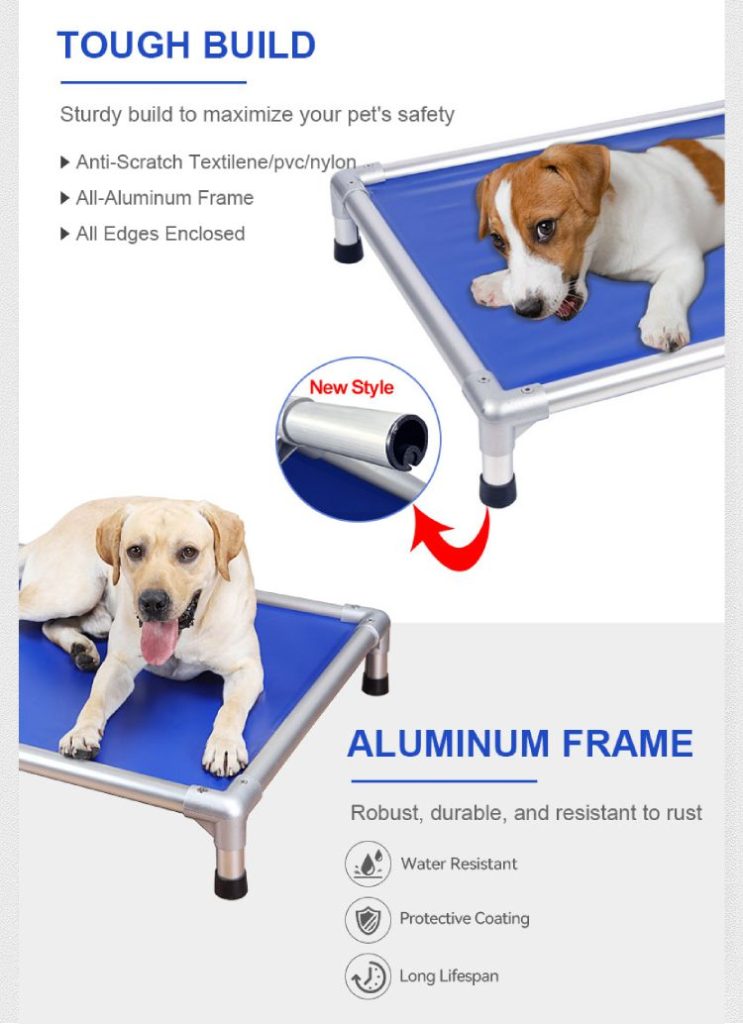
Therefore, look for sturdy frames and high-quality sleeping surfaces. Aluminum frames are particularly useful for elevated dog beds because aluminum combines strength with relatively low weight.
Moreover, aluminum does not absorb moisture like some materials. Consequently, it can work well for both indoor and outdoor environments when the entire bed is designed for those conditions.
Elevated Dog Beds for Large Dogs
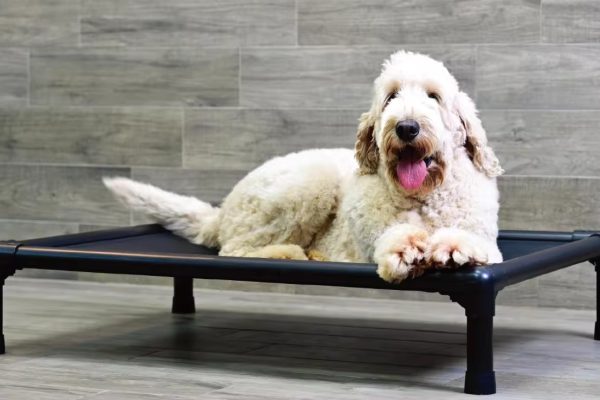
Elevated beds raise the sleeping surface above the floor. This simple design provides several practical advantages.
First, air can circulate underneath the bed. Therefore, an elevated sleeping surface can help your dog stay more comfortable during warmer conditions.
Additionally, your dog does not have to sleep directly on hard flooring, concrete, or outdoor surfaces.
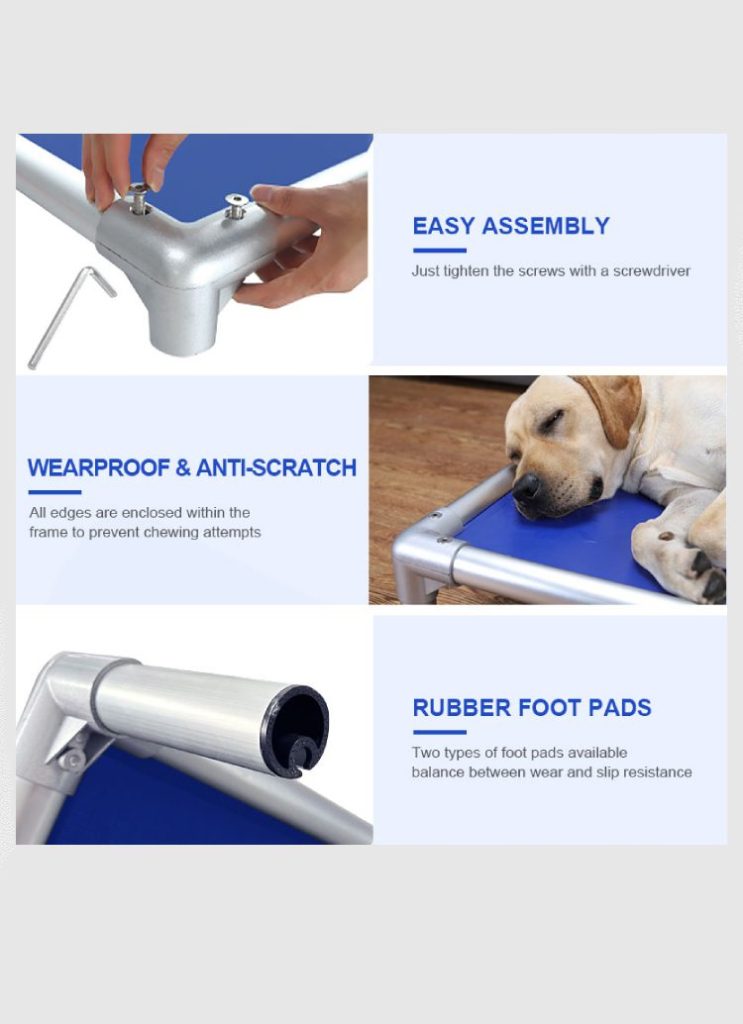
A quality elevated bed should include a stable frame, secure connections, and a strong sleeping surface. Most importantly, always check the manufacturer’s stated weight capacity before selecting a bed.
Aluminum Dog Beds for Large Breeds
Aluminum dog beds are worth considering when durability and long-term practicality matter.
A strong aluminum frame can support larger dogs without making the entire bed excessively heavy. Furthermore, aluminum is naturally resistant to rust, although hardware and other bed components may have different levels of weather resistance.
Aluminum frames can also be easier to wipe clean than heavily upholstered structures. Therefore, they can be practical for homes with active dogs.
For dogs that damage conventional beds, a sturdy metal frame can also reduce the amount of exposed soft material around the edges. However, no dog bed should automatically be considered completely chew-proof. Always consider your dog’s chewing behaviour and supervise destructive chewers when necessary.
Orthopedic Dog Beds for Large Dogs
Orthopedic beds are another popular choice, particularly for senior dogs and dogs that prefer a softer sleeping surface.
These beds commonly use supportive foam to distribute body weight. Therefore, they can provide comfortable cushioning around pressure points.
However, foam quality matters. Low-density foam may flatten faster under a heavy dog. In contrast, higher-quality supportive foam generally maintains its structure for longer.
Additionally, removable and washable covers make maintenance much easier.
Elevated vs Orthopedic Dog Beds
Both options have advantages.
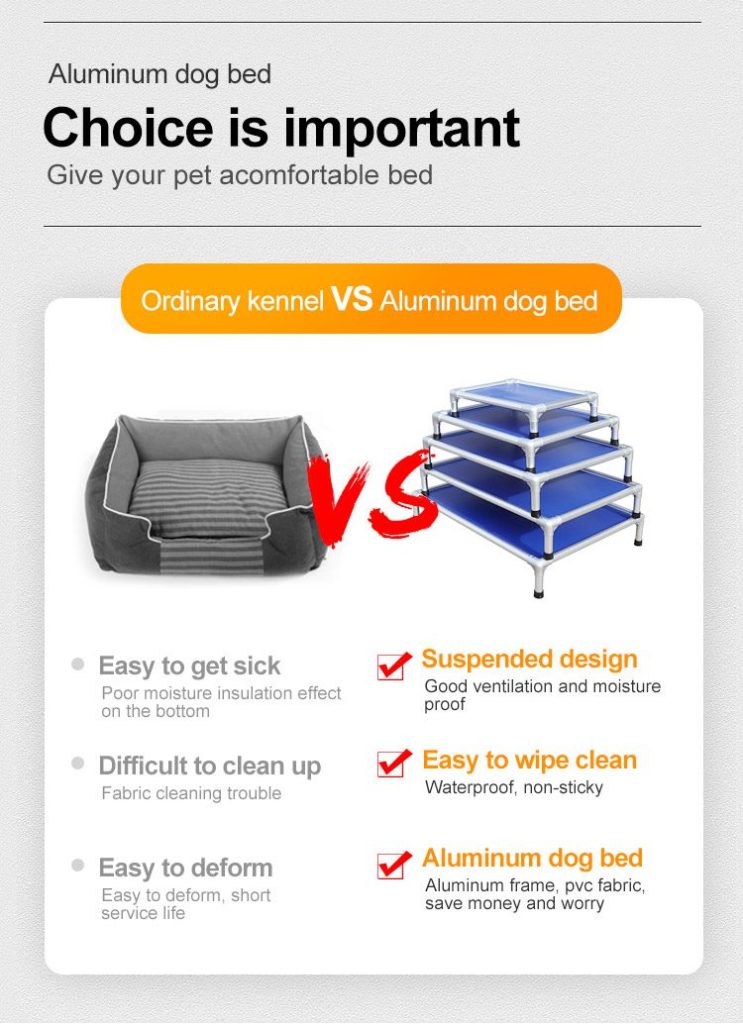
An elevated bed offers airflow, easy cleaning, and separation from the floor. Therefore, it can work particularly well for warm weather, patios, kennels, and everyday indoor use.
An orthopedic bed provides a cushioned surface and can offer excellent pressure distribution. Consequently, it may suit older dogs or dogs that strongly prefer soft bedding.
Some owners also combine the two approaches by adding an appropriate removable pad to an elevated bed when extra cushioning is needed.
Ultimately, the better choice depends on your dog’s size, age, sleeping habits, environment, and personal preference.
Best Dog Beds for Heavy Dogs
A heavy dog needs a bed that remains stable under repeated use. Therefore, weight capacity should be one of your first considerations.
Check the frame construction, joints, fabric tension, and manufacturer’s weight recommendation. Moreover, choose a sleeping area large enough to distribute your dog’s weight comfortably.
You should also check the bed regularly for loose hardware, damaged fabric, or unstable components. Regular inspection helps keep the resting area safe and comfortable.
Dog Beds for Large Breeds
Different breeds can have different sleeping needs.
For example, German Shepherds and Rottweilers usually benefit from spacious beds with strong support. Labrador Retrievers may appreciate durable and easy-to-clean materials, especially if they regularly spend time outdoors.
Meanwhile, giant breeds such as Great Danes require significantly more sleeping space. Therefore, always use your dog’s measurements rather than selecting a bed based only on a generic breed label.
Indoor and Outdoor Dog Beds
If you plan to move the bed between indoor and outdoor areas, choose materials that are easy to maintain.
For outdoor use, consider airflow, moisture resistance, frame construction, fabric durability, and cleaning requirements. Additionally, keep the bed in a suitable sheltered area whenever possible.
An elevated design can be particularly practical outdoors because it keeps the sleeping surface away from the ground. However, outdoor suitability depends on every component of the bed, not simply the frame material.
How to Choose the Right Dog Bed Size
Start by measuring your dog while resting in a natural position. After that, add enough space for comfortable movement and stretching.
Also, check the actual sleeping-surface dimensions rather than relying only on labels such as Large, XL, or XXL. Sizes can vary considerably between manufacturers.
For example, an XL bed from one company may have different dimensions from an XL bed sold by another. Therefore, actual measurements provide a much more reliable comparison.
Easy Cleaning Matters
Large dogs can bring dirt, loose hair, and moisture onto their beds. Consequently, easy maintenance can save considerable time.
Look for washable or wipe-clean sleeping surfaces. Removable covers are also useful because you can clean them separately.
Furthermore, regularly cleaning the surrounding floor and checking underneath elevated beds can help maintain a cleaner resting area.
How Long Should a Large Dog Bed Last?
There is no single lifespan for every dog bed. Durability depends on construction quality, your dog’s weight, chewing behaviour, cleaning routine, and whether you use the bed indoors or outdoors.
Nevertheless, stronger materials and replaceable components can extend the useful life of a bed.
Instead of considering only the initial price, compare construction quality and expected use. A durable bed that performs well for a long period may offer better overall value than a cheaper bed that requires frequent replacement.
Final Thoughts
Finding the best dog beds for large dogs starts with understanding your dog’s individual needs. Size is important; however, support, construction quality, durability, airflow, and maintenance matter as well.
Elevated aluminum beds can provide a strong, ventilated, and practical sleeping solution for many large breeds. Meanwhile, orthopedic beds offer additional cushioning for dogs that prefer softer surfaces.
Therefore, measure your dog carefully, consider where you will use the bed, and compare the materials before buying. Most importantly, choose a bed that gives your large dog enough space and dependable support for comfortable everyday rest.