
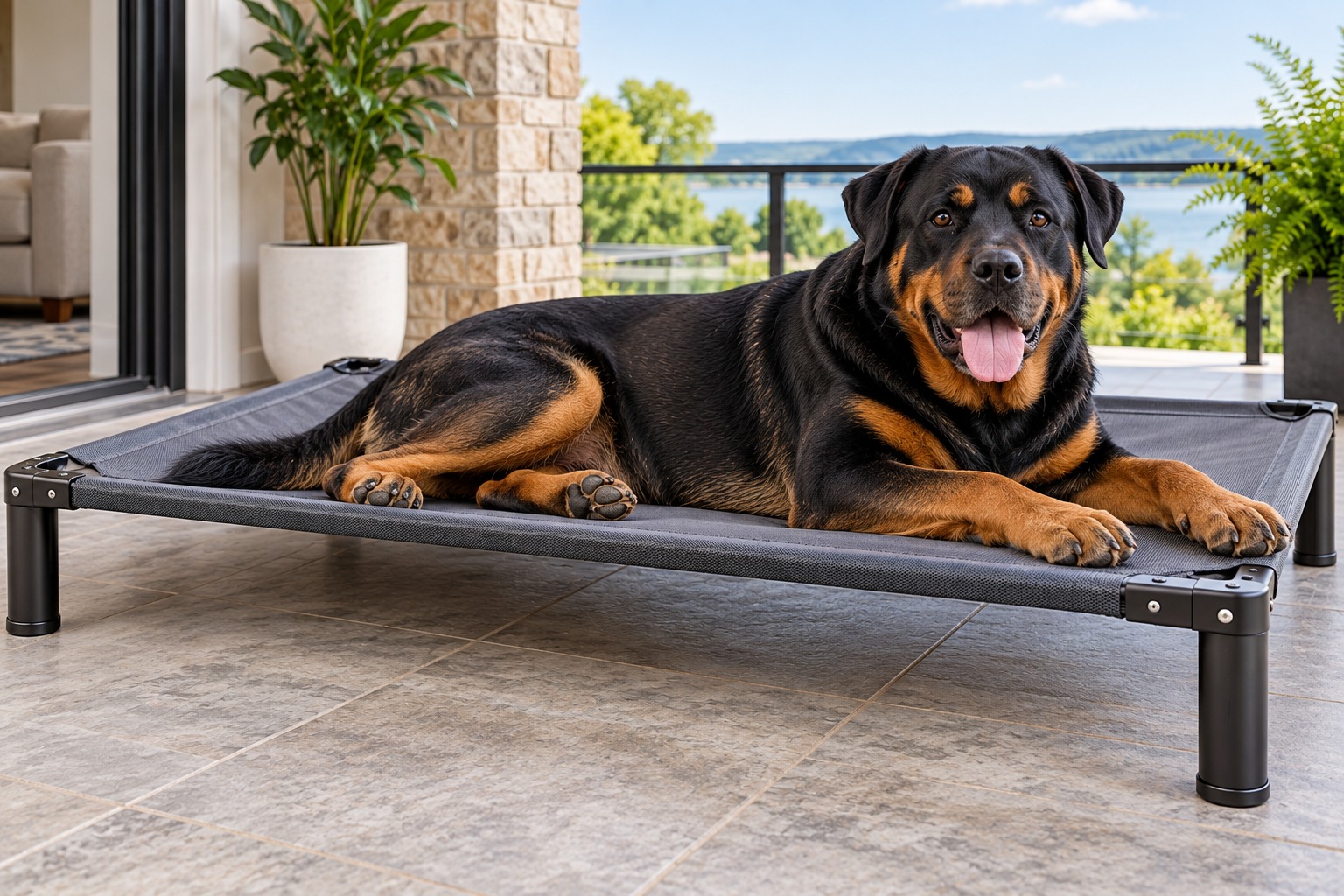
Heavy Duty Dog Beds for Large Dogs: What to Look For
Large dogs need more than a soft place to sleep. Their size, weight, activity level, and daily movement can put significant stress on a dog bed. Therefore, choosing a heavy duty dog bed for large dogs means looking beyond appearance and focusing on strength, support, materials, and the right size.
Whether you have a German Shepherd, Rottweiler, Labrador Retriever, Great Dane, Mastiff, or another large breed, a durable bed can provide a more dependable resting space. Here is what to look for when choosing a heavy-duty dog bed.
Why Large Dogs Need Heavy Duty Dog Beds
Large breeds put considerably more pressure on a bed than smaller dogs. Over time, low-quality filling can flatten, fabric can tear, and weak frames can lose their stability.
A heavy-duty dog bed is designed to handle regular use while maintaining its structure. The right combination of a strong base, durable materials, and adequate support can make the bed more suitable for everyday use.
Choose the Right Size
Size should be one of the first things you consider. Your dog should be able to lie down fully without their head, legs, or body hanging over the edges.
Measure your dog from the nose to the base of the tail while they are stretched out. Then, add several inches to provide additional room.
Also, check the actual sleeping area rather than relying only on labels such as Large, XL, or XXL. Bolsters and raised edges can reduce the usable space inside the advertised dimensions.
Look for Strong and Durable Materials
The materials used in a dog bed have a major impact on its durability. Large dogs can put significant stress on fabric through scratching, digging, jumping, and repeated movement.
Look for tightly woven fabrics, durable canvas, ripstop materials, or other heavy-duty upholstery fabrics. Reinforced stitching around corners and seams can also help the bed withstand regular use.
If your dog is a frequent chewer or digger, consider a design specifically made for dogs with destructive chewing habits. However, no dog bed should be considered completely indestructible.
Consider the Bed's Weight Capacity
A bed can have a large sleeping surface but still be unsuitable for a heavy dog. This is particularly important with elevated and framed dog beds.
Always check the manufacturer’s recommended weight capacity and compare it with your dog’s current weight. The frame and sleeping platform should provide adequate support without excessive sagging.
For giant breeds, this specification can be just as important as the bed’s dimensions.
Choose Supportive Filling
Heavy dogs need a sleeping surface that can maintain its shape under repeated pressure. Loose fiberfill can compress over time, while high-density foam or layered orthopedic foam can provide more consistent support.
For large and senior dogs, consider an orthopedic heavy duty dog bed with a supportive foam base. Memory foam and high-density foam are common choices for beds designed for larger breeds.
Elevated Heavy Duty Dog Beds
Elevated dog beds provide another option for large dogs. Instead of placing your pet directly on the floor, these beds use a raised frame and durable fabric sleeping surface.
A heavy-duty elevated dog bed can provide airflow underneath your dog and can be useful indoors, outdoors, in kennels, or on patios. Aluminum frames are also worth considering because they can provide a strong yet relatively lightweight structure.
However, always check the frame construction and weight rating before choosing an elevated bed for a large or giant breed.
Look for Washable and Water-Resistant Covers
Large dogs can bring dirt, moisture, fur, and debris onto their beds. Consequently, easy cleaning is an important part of long-term durability.
Choose a bed with a removable, machine-washable cover whenever possible. A waterproof or water-resistant inner liner can also help protect the foam from moisture and accidents.
Consider Your Dog's Sleeping Style
Your dog’s sleeping position should influence the bed you choose.
Dogs that stretch out across their sides generally need a large, flat sleeping surface. Dogs that curl up may prefer a bed with raised edges or bolsters. Meanwhile, dogs that frequently change positions may benefit from an open design with plenty of space.
Therefore, observe how your dog normally sleeps before selecting the shape and size.
If your dog regularly chews, scratches, or digs at their bed, durability becomes even more important. Look for reinforced seams, chew-resistant fabrics, protected zippers, and fewer exposed components that your dog can grab.
Keep in mind that “heavy duty” does not automatically mean “chew-proof.” A determined chewer may eventually damage even a well-constructed bed.
Indoor or Outdoor Use?
Think about where your dog will use the bed. Indoor beds can prioritize cushioning and comfort, while outdoor beds should also provide ventilation, moisture resistance, and easy cleaning.
For patios, decks, garages, kennels, and outdoor spaces, an elevated heavy-duty bed can be a practical choice. For indoor sleeping, a thick orthopedic mattress may provide more cushioning.
Final Thoughts
Choosing Heavy Duty Dog Beds for Large Dogs requires more than selecting the biggest size available. Consider your dog’s length, weight, sleeping position, activity level, and environment.
Look for a strong construction, durable fabric, adequate weight capacity, supportive foam or a sturdy elevated frame, and easy-to-clean materials. By checking these features before purchasing, you can choose a heavy-duty dog bed that provides your large dog with a comfortable and dependable place to rest.