Chew Proof Dog Beds for Aggressive Chewers: Buying Guide
Finding a durable bed for an aggressive chewer can be challenging. Dogs that constantly chew, scratch, dig, or pull at their bedding can quickly destroy ordinary fabric and foam beds. Therefore, choosing a chew proof dog bed for aggressive chewers requires careful attention to materials, construction, seams, zippers, and overall design.
Although many products are marketed as “chew proof” or “indestructible,” no dog bed can guarantee protection against every determined chewer. The goal is to choose a design that minimizes accessible edges and weak points while providing a safe and comfortable resting surface.
Why Regular Dog Beds May Not Work
Traditional plush dog beds often contain soft fabric, exposed seams, zippers, bolsters, and loose filling. These features can give an aggressive chewer several places to start biting or pulling.
Once a dog tears through the cover, exposed foam or stuffing can become a concern. Therefore, dogs that repeatedly destroy their beds may benefit from a simpler, reinforced design with fewer loose components.
Choose Strong, Chew-Resistant Materials
Material selection is one of the most important factors when buying a bed for an aggressive chewer.
Heavy-duty vinyl, ballistic-style fabrics, ripstop materials, and tightly woven fabrics can provide greater resistance to tearing and punctures than soft plush materials. However, the fabric alone does not determine durability. The way the material is attached to the frame and the quality of the seams are equally important.
For extremely destructive dogs, consider a bed with a rigid frame that protects the edges of the sleeping surface.
Look for Reinforced Seams
Seams are common weak points because dogs can often get their teeth underneath an exposed edge. Double stitching, reinforced corners, and securely enclosed fabric can make it more difficult for a dog to start pulling the material apart.
A well-designed elevated bed can go a step further by securing the fabric inside the frame. This reduces the number of exposed edges available for chewing.
Avoid Exposed Zippers
Zippers can be particularly attractive to dogs that like to chew or pull at their bedding. An exposed zipper pull gives the dog something easy to grab.
If you prefer a mattress-style bed, look for a design with a covered, recessed, or otherwise protected zipper. For extremely persistent chewers, an elevated cot without an exposed zipper may be a more suitable design.
Consider an Elevated Dog Bed
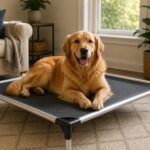
An elevated dog bed can be a practical option for aggressive chewers because it generally uses a taut sleeping surface rather than loose stuffing.
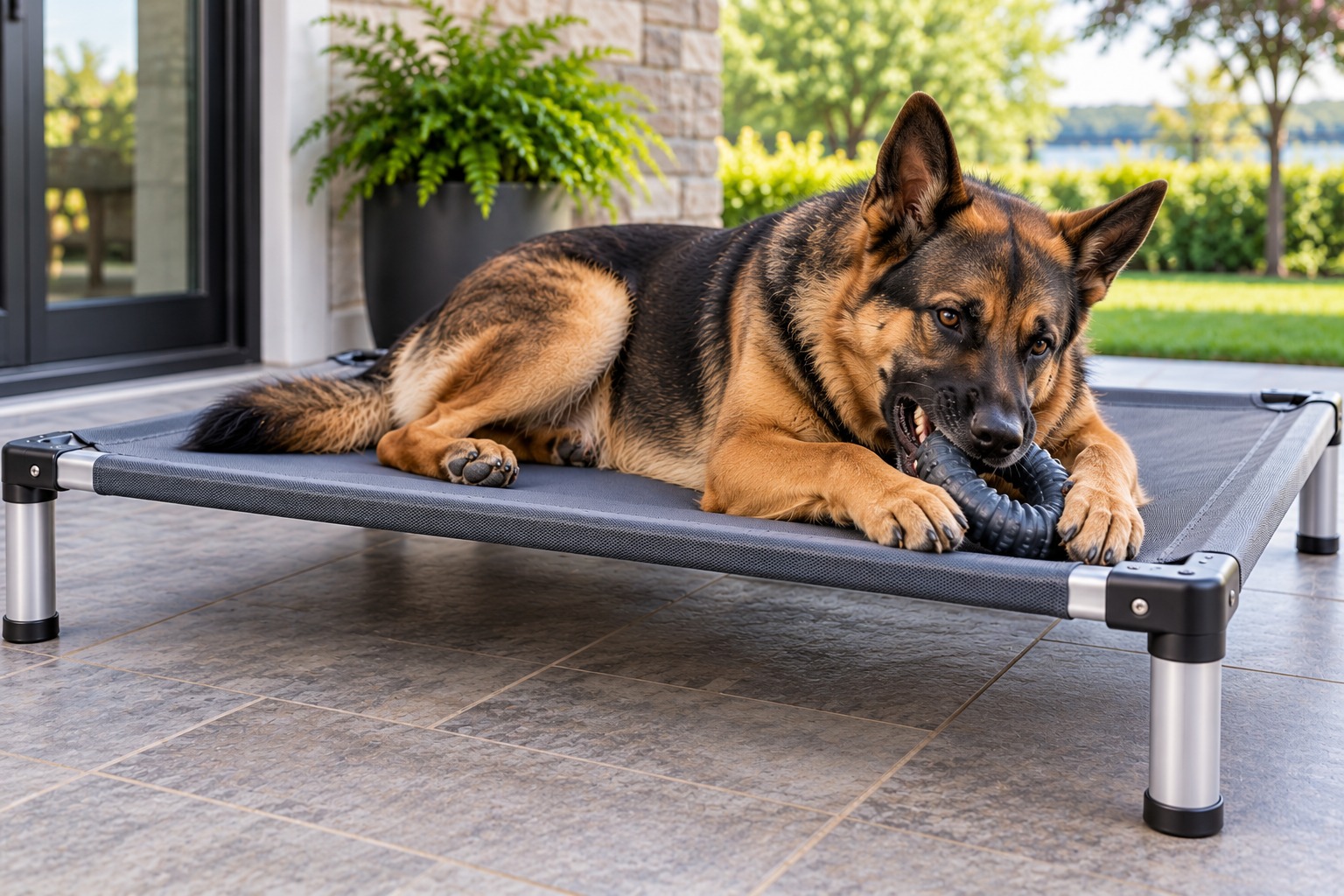
Some heavy-duty elevated designs use aluminum frames with fabric secured inside the frame. This construction can reduce accessible edges and eliminate loose filling that a dog could pull out. Kuranda, for example, describes enclosed corners and frame rails designed to keep fabric edges out of reach.
Elevated beds can also improve airflow underneath your dog and are useful for indoor and outdoor environments.
Aluminum Frames for Aggressive Chewers
If durability is your priority, consider the frame as well as the fabric. Aluminum can provide a strong and relatively lightweight structure for elevated dog beds.
Some chew-resistant designs use aluminum around the entire perimeter, including the corners, to protect vulnerable edges. K9 Ballistics, for example, describes its armored elevated design as using an aluminum frame that encloses the fabric edges.
For large and giant breeds, always check the manufacturer’s weight capacity before purchasing.
Choose the Right Size
A durable bed still needs to be comfortable. Your dog should have enough space to lie down, stretch, turn around, and change positions.
Measure your dog from the nose to the base of the tail while stretched out. Then, compare that measurement with the actual sleeping area of the bed.
For large breeds and aggressive chewers, an extra large chew proof dog bed can provide additional space while reducing the likelihood that your dog will hang over the edges.
Check the Weight Capacity
Weight capacity is particularly important for elevated beds. A bed designed for a smaller dog may not provide enough support for a large or giant breed.
Always compare your dog’s current weight with the manufacturer’s recommended maximum weight. A strong frame and properly tensioned sleeping surface can help provide better support during everyday use.
Not every chewer behaves the same way. Some dogs chew because they are bored, while others scratch, dig, pull fabric, or focus on zippers and corners.
Observe what your dog does to previous beds. If your dog attacks seams, choose a design with enclosed edges. If your dog pulls out stuffing, consider a fill-free elevated cot. If your dog scratches and digs, look for heavy-duty fabric specifically designed for rough use.
Matching the bed to your dog’s behavior can make your purchase more practical.
Safety Should Come First
Even a highly durable dog bed should be inspected regularly. If your dog manages to tear the fabric, expose foam, loosen hardware, or create pieces that could be swallowed, remove the bed from use.
Some manufacturers specifically advise supervising persistent chewers when introducing a new bed and removing damaged bedding immediately.
Remember that “chew proof” does not mean indestructible. Your dog’s individual behavior ultimately determines how long any bed will last.
Easy Cleaning Is Another Advantage
Aggressive chewers are not the only reason to choose durable materials. Dogs can also bring dirt, fur, moisture, and debris onto their beds.
Heavy-duty vinyl and similar smooth surfaces can be easier to wipe clean than plush fabrics. Elevated beds can also keep the sleeping surface away from the floor, making them convenient for patios, garages, kennels, and outdoor spaces.
Final Thoughts
Choosing Chew Proof Dog Beds for Aggressive Chewers is about more than finding a product with an “indestructible” label. Look for strong materials, reinforced construction, protected seams, minimal exposed edges, secure frames, and a suitable weight capacity.
For dogs that repeatedly destroy traditional beds, an elevated aluminum design with a tightly secured sleeping surface can be a practical option. However, always supervise your dog when introducing a new bed and inspect it regularly for damage.
By considering your dog’s chewing habits, size, weight, and sleeping preferences, you can choose a durable bed that offers a better balance of comfort, safety, and long-term use.