
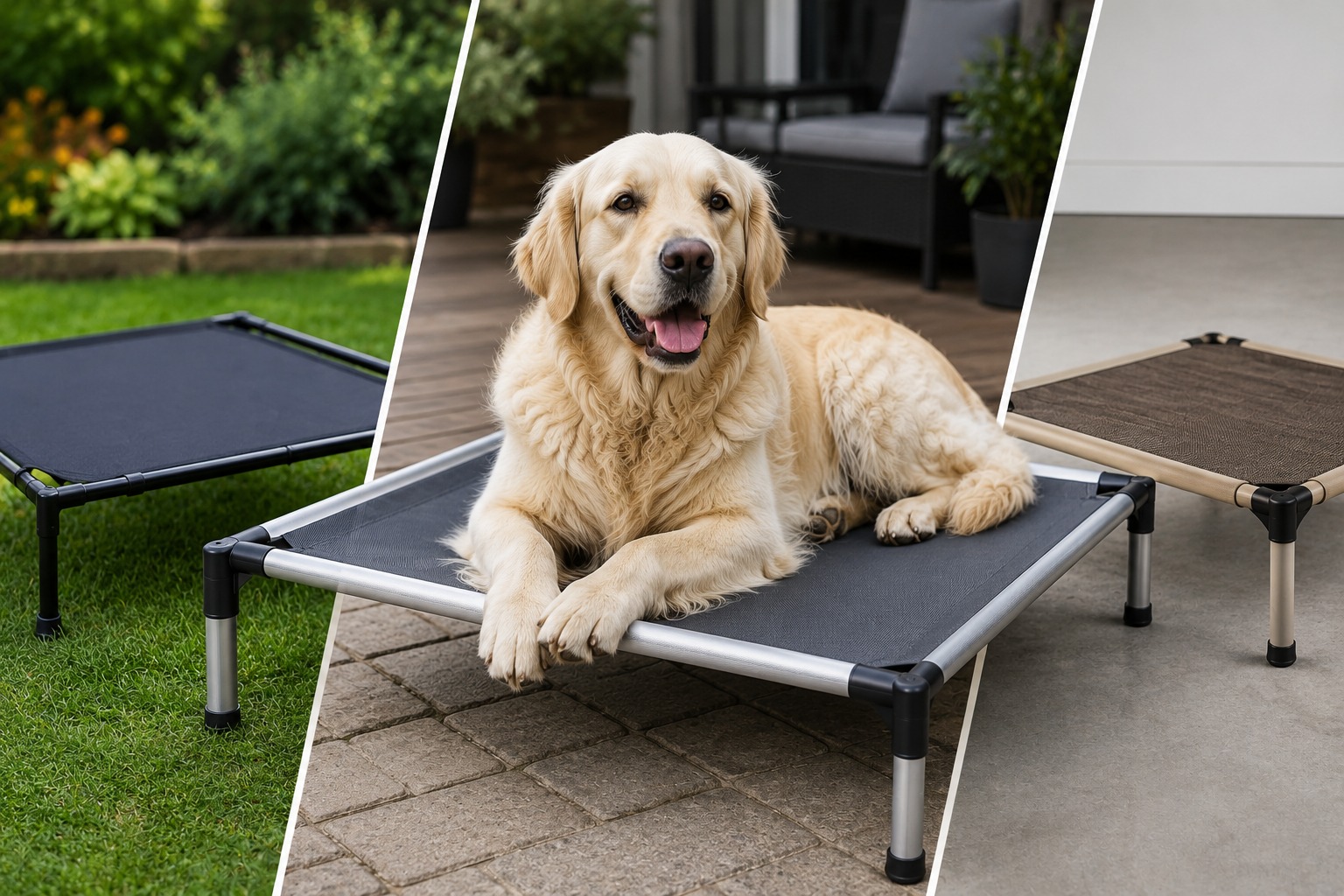
Best Elevated Dog Beds for Large Dogs: Aluminum vs Other Materials
Choosing the best elevated dog bed for a large dog requires more than looking at the size or appearance. Large dogs need a stable frame, sufficient weight capacity, a durable sleeping surface, and enough room to stretch comfortably.
Elevated dog beds are popular because they raise dogs above the floor while allowing air to move underneath the sleeping surface. Moreover, different frame materials offer different advantages. Aluminum, steel, plastic, and composite frames can all work, but the right option depends on your dog’s size, chewing habits, location, and budget. Current 2026 comparisons continue to place aluminum and steel among the leading frame choices for large-breed elevated beds.
In this guide, we’ll compare aluminum vs steel vs plastic elevated dog beds and explain which option may work best for large dogs.
Why Choose an Elevated Dog Bed for a Large Dog?
Large dogs can generate more body heat and put more pressure on their beds. Therefore, a traditional soft bed may not always be the most practical option.
An elevated dog bed can provide:
- Better airflow underneath
- A raised sleeping surface
- Easy cleaning
- Strong support
- Outdoor versatility
- Less contact with cold or hot floors
- A durable resting area for active dogs
Furthermore, breathable mesh surfaces can help improve ventilation, which is one reason elevated beds are frequently recommended for warm-weather use.
Aluminum vs Steel vs Plastic Dog Beds
The frame material plays an important role in an elevated dog bed’s performance.
| Feature | Aluminum | Steel | Plastic/Composite |
|---|---|---|---|
| Strength | Excellent | Excellent | Moderate |
| Weight | Lightweight | Heavier | Lightweight |
| Corrosion resistance | Excellent | Depends on coating | Excellent |
| Portability | Excellent | Moderate | Excellent |
| Outdoor use | Excellent | Good | Good |
| Large-dog support | Excellent | Excellent | Depends on design |
| Chew resistance | Excellent | Excellent | Moderate |
| Price | Usually higher | Usually lower | Usually lower |
| Maintenance | Low | Moderate | Low |
However, the frame material isn’t the only factor. The weight rating, joints, legs, fabric, and overall construction can be equally important.
Aluminum Elevated Dog Beds for Large Dogs
Aluminum is an excellent choice if you want a combination of strength, low weight, durability, and corrosion resistance.
An aluminum elevated dog bed can be particularly useful for owners who frequently move the bed between indoor and outdoor areas.
Advantages of Aluminum
Lightweight: Aluminum is easier to move than many steel frames.
Corrosion resistant: Aluminum does not develop rust in the same way ordinary steel does.
Outdoor friendly: Therefore, aluminum can work well for patios, decks, backyards, kennels, and camping.
Strong: A properly designed aluminum frame can support large and giant dogs.
Easy maintenance: The frame generally requires little maintenance beyond routine cleaning.
Current elevated-bed comparisons identify aluminum frames as a strong option for large dogs, particularly when portability and outdoor durability matter.
When Should You Choose Aluminum?
Choose an aluminum elevated dog bed if your priorities include:
- Large or giant dog support
- Frequent outdoor use
- Lightweight construction
- Corrosion resistance
- Durability
- Easy portability
- Heavy-chewer resistance
Steel Elevated Dog Beds for Large Dogs
Steel is another popular choice for large-dog beds.
The main advantage is its strength and affordability. A properly constructed steel frame can provide excellent stability for heavy dogs.
Moreover, powder-coated steel can resist corrosion when the protective coating remains intact. However, damaged coating can expose the underlying steel to moisture and eventually lead to rust.
Advantages of Steel
- Strong frame
- Excellent stability
- Generally affordable
- Widely available
- Suitable for large dogs
- Good weight capacity
Disadvantages of Steel
- Heavier than aluminum
- Can rust if the protective coating becomes damaged
- Less convenient to move frequently
Therefore, steel can be a great option if strength and affordability are more important than low weight.
Plastic or Composite Elevated Dog Beds
Plastic and composite frames can provide a lightweight and corrosion-resistant alternative.
They can work well for smaller dogs, travel, or occasional use. However, large and powerful dogs require more careful consideration.
Plastic frames can flex more than metal frames, and some lower-quality designs may not provide enough stability for very heavy dogs.
Therefore, if you have a giant breed or a strong dog that frequently jumps onto the bed, carefully check the manufacturer’s weight rating and frame construction.
Which Material Is Best for Large Dogs?
For many large-dog owners, the choice comes down to aluminum vs steel.
Choose Aluminum If You Want:
- Lightweight construction
- Excellent corrosion resistance
- Easy portability
- Outdoor versatility
- Strong support
- Premium durability
Choose Steel If You Want:
- Strong structural support
- Lower purchase cost
- A heavier, stable frame
- Easy availability
Choose Plastic or Composite If You Want:
- Lightweight construction
- Lower cost
- Corrosion resistance
- Occasional or travel use
Therefore, there isn’t one material that is perfect for every dog.
However, aluminum is particularly attractive for large dogs when you want strong support without the extra weight of steel.
What Weight Capacity Should a Large Dog Bed Have?
Weight capacity is one of the most important factors when choosing an elevated dog bed.
First, determine your dog’s current weight.
Next, check the manufacturer’s maximum weight rating.
Then, consider your dog’s activity level.
A dog doesn’t simply lie motionless on the bed. They may jump onto it, move around, or land heavily.
Therefore, choosing a bed with additional weight capacity can provide a better margin of support.
For example, current elevated-bed models range from around 200 pounds to 300 pounds or more depending on the size and design.
Don’t choose a bed based solely on breed.
Instead, measure your dog while they are lying naturally.
Your dog should be able to:
- Stretch fully
- Turn around
- Curl up
- Change positions
- Keep all four legs comfortably on the sleeping surface
For very large breeds, an X-Large or giant-size elevated dog bed may be more appropriate.
Furthermore, check the actual sleeping surface rather than relying only on the advertised overall dimensions.
Best Sleeping Surface for Large Dogs
The frame is important, but the sleeping surface also affects comfort and durability.
Mesh
Mesh is an excellent option for airflow.
Therefore, it can be particularly useful for large dogs that become warm easily.
HDPE Fabric
HDPE mesh is commonly used in elevated beds because it provides airflow and outdoor durability. Current comparisons highlight its cooling and weather-resistant properties.
Textilene or Teslin
These materials can provide a combination of airflow, durability, and easy cleaning.
Vinyl
Vinyl can provide excellent durability and water resistance. However, it may not offer the same breathability as open mesh.
Therefore, choose the sleeping surface based on whether your priority is cooling, durability, outdoor use, or chew resistance.
Best Material for Dogs That Chew
If your large dog is an aggressive chewer, frame material becomes even more important.
An elevated cot design already removes much of the stuffing and foam found in traditional beds. Therefore, there are fewer soft components for a dog to grab.
Aluminum and steel frames can both provide strong resistance to chewing. However, the sleeping surface and corners still need to be evaluated.
Current comparisons identify aluminum-framed beds such as Kuranda and K9 Ballistics as particularly strong choices for heavy chewers.
Remember, though, that no dog bed is completely indestructible. Choose a product with appropriate construction and, where available, a chew-resistant warranty.
Are Aluminum Elevated Dog Beds Good for Outdoor Use?
Yes. Aluminum is particularly suitable for outdoor environments because it naturally resists corrosion.
You can use an aluminum elevated dog bed in a:
- Backyard
- Patio
- Deck
- Kennel
- Garage
- Covered porch
- Camping area
Furthermore, the elevated design keeps the sleeping surface away from wet grass, mud, and some ground debris.
However, check the manufacturer’s recommendations before leaving any dog bed outdoors for prolonged periods.
Are Elevated Dog Beds Good for Summer?
Yes. One of the biggest advantages of an elevated dog bed is airflow.
Because the sleeping surface is raised, air can move underneath your dog.
Moreover, breathable mesh allows additional ventilation.
As a result, an elevated bed can be a useful summer resting option for large dogs. Current 2026 guides continue to emphasize airflow as a major advantage of raised dog beds.
However, always provide your dog with shade, fresh water, ventilation, and a cool environment during hot weather.
Aluminum vs Steel: Which Is Better?
If you are choosing specifically between aluminum and steel, consider your priorities.
Aluminum Is Better When:
You want a lightweight frame that is easy to move and naturally resistant to corrosion.
Steel Is Better When:
You want a strong and affordable frame and don’t mind additional weight.
For Outdoor Use:
Aluminum has an advantage because it doesn’t rust like ordinary steel. However, coated steel can also perform well when properly maintained.
For Large Dogs:
Both materials can work well. Therefore, focus on the weight capacity and frame design rather than choosing based only on material.
How to Choose the Best Elevated Dog Bed for Your Large Dog
Use this checklist before buying:
1. Measure Your Dog
Measure length and width while your dog is lying down.
2. Check the Sleeping Surface
Make sure your dog has enough room to stretch.
3. Check Weight Capacity
Choose a model rated comfortably above your dog’s weight.
4. Examine the Frame
Look for strong joints, stable legs, and quality hardware.
5. Consider Chewing Habits
Heavy chewers need stronger frame and fabric construction.
6. Consider Your Location
Choose an indoor, outdoor, or indoor/outdoor model depending on where you will use it.
7. Check the Fabric
Choose mesh for airflow or a more durable coated fabric for demanding use.
8. Consider Portability
If you move the bed frequently, aluminum can be particularly convenient.
Aluminum vs Other Materials: Final Verdict
So, what is the best elevated dog bed material for large dogs?
For many owners, aluminum is an excellent premium choice because it combines strength, light weight, corrosion resistance, portability, and outdoor versatility.
Steel remains a strong alternative when you want maximum value and don’t mind a heavier frame.
Meanwhile, plastic or composite beds can work for lighter-duty applications but require careful attention to weight capacity and stability.
Ultimately, the best elevated dog bed is the one that matches your dog’s weight, size, sleeping style, chewing behavior, and environment.
Frequently Asked Questions
Is aluminum better than steel for a large dog bed?
Aluminum is lighter and naturally corrosion-resistant, while steel can provide excellent strength at a lower price. Therefore, aluminum is often better for portability and outdoor use, while steel can be better for value.
What is the strongest material for an elevated dog bed?
Both aluminum and steel can provide excellent strength when properly engineered. The frame design, joints, legs, and weight rating are just as important as the material.
Are aluminum dog beds good for heavy dogs?
Yes. A properly designed aluminum elevated bed can support large and heavy dogs. Always check the manufacturer’s weight capacity.
Are steel dog beds good for outdoor use?
Yes, provided the steel has suitable corrosion protection. However, damaged coatings can expose steel to moisture and eventually cause rust.
Are plastic elevated dog beds good for large dogs?
They can work for some large dogs, but you should carefully check the weight capacity and frame stability. For very large or powerful dogs, aluminum or steel is often the safer choice.
Are elevated dog beds comfortable for large dogs?
Many dogs find elevated beds comfortable because they provide firm support and airflow. However, dogs that prefer soft cushioning may prefer an orthopedic or padded bed.