What Size Elevated Dog Bed Does My Dog Need?
Choosing the right elevated dog bed size is important for your dog’s comfort, posture, and everyday rest. A bed that is too small can restrict movement. On the other hand, a bed that is much larger than necessary may take up extra space without providing additional benefits.
So, what size elevated dog bed does your dog need?
The answer depends on your dog’s length, width, weight, sleeping position, and breed size. Therefore, instead of choosing a bed based only on breed, measure your dog and compare those measurements with the actual sleeping area.
In this guide, you’ll learn how to measure your dog, choose between medium, large, and X-Large elevated dog beds, and find the right size for comfortable everyday use.
Why Does the Right Dog Bed Size Matter?
Dogs spend many hours resting every day. Therefore, their bed should provide enough space to lie down naturally, stretch, turn, and change positions.
An elevated dog bed can provide additional airflow underneath your pet because the sleeping surface sits above the floor. However, the bed must still be large enough for your dog to use comfortably.
A properly sized bed can provide:
- Enough room to stretch
- Comfortable sleeping space
- Better freedom of movement
- Stable support
- Improved resting comfort
- Suitable space for different sleeping positions
Therefore, choosing the right size is just as important as choosing the right material.
How Do You Measure Your Dog for an Elevated Dog Bed?
Measuring your dog is the best way to select the correct bed size.
You don’t need complicated equipment. A measuring tape and a few minutes are usually enough.
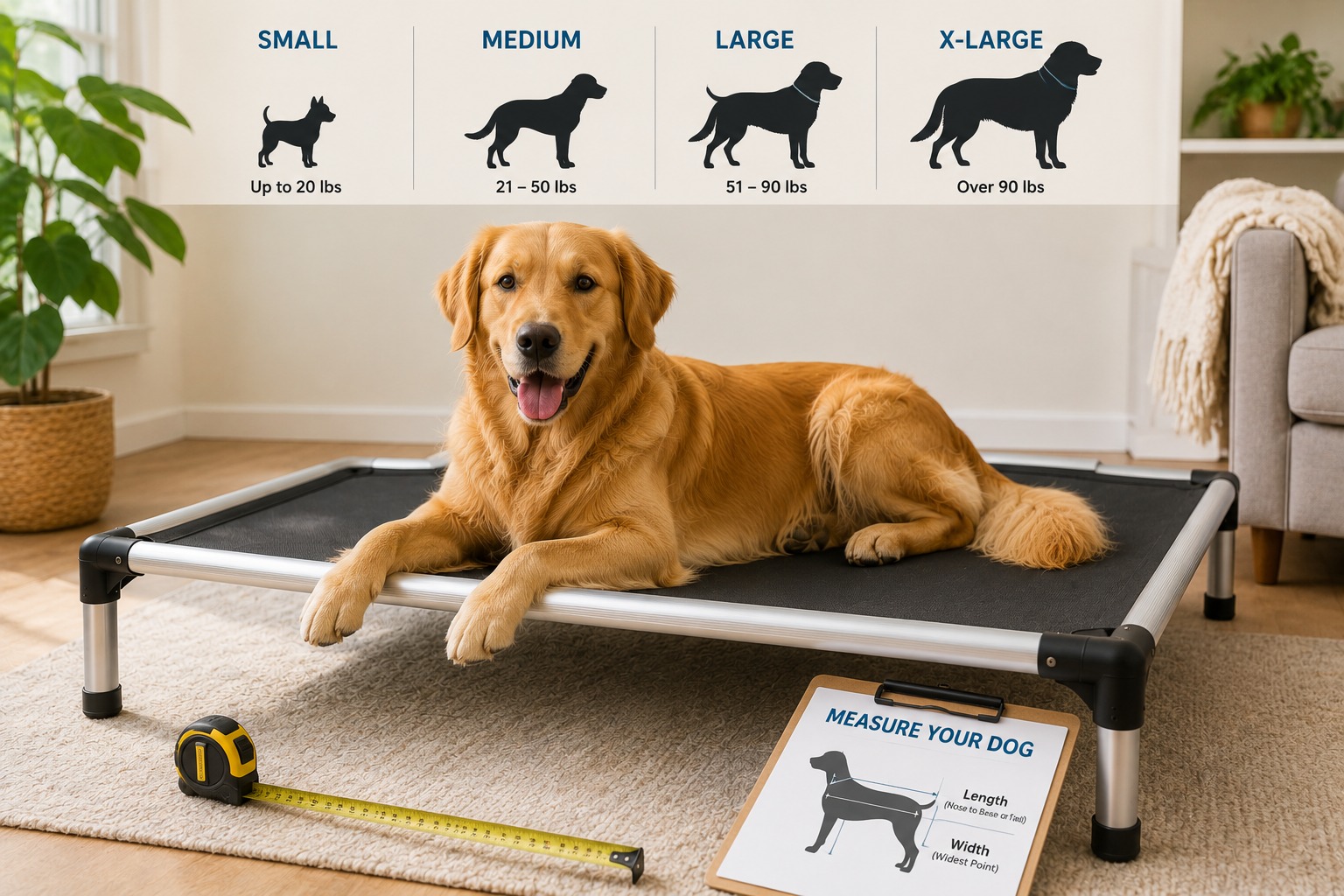
Step 1: Measure Your Dog’s Length
Ask your dog to lie down naturally.
Then, measure from the tip of the nose to the base of the tail.
Don’t measure only from the shoulders to the tail because your dog’s head may extend beyond the main body when sleeping.
Step 2: Measure Your Dog’s Width
Next, measure the widest part of your dog while they are lying down.
This measurement helps you determine how much sleeping space your dog needs from side to side.
Step 3: Observe Your Dog’s Sleeping Position
Finally, watch how your dog normally sleeps.
Does your dog:
- Curl into a ball?
- Stretch out completely?
- Sleep on their side?
- Move frequently?
- Spread their legs while sleeping?
If your dog frequently stretches out, choose a larger sleeping surface.
Therefore, measurements and sleeping habits should work together when selecting an elevated dog bed.
How Much Extra Space Should a Dog Bed Have?
Your dog should fit comfortably on the sleeping surface without hanging over the edges.
However, you don’t need to buy the largest bed available.
Instead, look for enough additional space for your dog to change positions comfortably.
For dogs that stretch while sleeping, allowing several extra inches around their body can provide useful additional space.
Moreover, remember that overall bed dimensions and sleeping-area dimensions are not always the same.
For example, a dog bed might have a large overall frame, but the usable sleeping surface may be smaller.
Therefore, always check the manufacturer’s actual sleeping-area measurements before purchasing.
Medium vs Large vs X-Large Elevated Dog Beds
Most pet owners can start their search by considering three common size categories:
- Medium
- Large
- X-Large
However, size labels can vary between manufacturers.
Therefore, don’t assume that every “large” dog bed has the same dimensions.
Instead, compare the actual measurements and weight capacity.
Medium Elevated Dog Bed
A medium elevated dog bed can suit medium-sized dogs that need more space than a small bed provides.
Depending on the product dimensions, medium beds may work well for dogs such as:
- Cocker Spaniels
- Border Collies
- Beagles
- Australian Shepherds
- Smaller Labrador-type dogs
However, breed alone shouldn’t determine your choice.
For example, two dogs of the same breed can have different body sizes.
Therefore, measure your individual dog before purchasing.
When Should You Choose a Medium Bed?
Choose a medium elevated dog bed when your dog:
- Fits comfortably within the sleeping dimensions
- Can lie down without hanging over the edges
- Has enough room to turn
- Falls within the manufacturer’s weight rating
If your dog is close to the upper limit, consider moving up to the next size.
Large Elevated Dog Bed
A large elevated dog bed provides more sleeping space for bigger dogs.
It can be suitable for breeds such as:
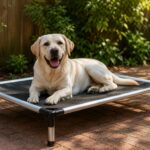
- Labrador Retrievers
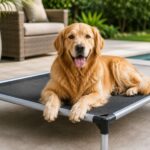
- Golden Retrievers
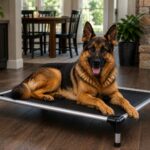
- German Shepherds
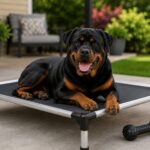
- Rottweilers
- Dobermans
- Larger Huskies
- Other large breeds
However, these breeds can vary significantly in size.
Therefore, measure your dog before choosing a large bed.
Large dogs also place more pressure on the frame. Consequently, check the maximum weight capacity as well as the sleeping dimensions.
X-Large Elevated Dog Bed
An X-Large elevated dog bed provides additional space for extra-large and giant breeds.
It may be suitable for dogs such as:
- Great Danes
- Mastiffs
- Saint Bernards
- Newfoundlands
- Bernese Mountain Dogs
- Large American Bullies
- Other giant breeds
However, don’t automatically choose X-Large simply because your dog is a large breed.
Instead, compare your dog’s measurements with the actual sleeping area.
Furthermore, pay close attention to the manufacturer’s weight capacity because giant breeds require a stronger and more stable sleeping platform.
Large dogs generally need a spacious sleeping surface that allows them to stretch comfortably.
For example, if your Labrador Retriever sleeps fully stretched out, a smaller bed may feel restrictive.
Therefore, measure your dog from nose to tail while they are lying naturally.
Next, compare that measurement with the sleeping area of the large or X-Large bed.
If your dog is close to the maximum dimensions of the large bed, choosing an X-Large option may provide more comfortable movement.
However, always check the product’s weight rating before making the final decision.
What Size Elevated Dog Bed Does a Puppy Need?
Puppies grow quickly.
Therefore, buying a bed that fits perfectly today may not provide enough room several months later.
You have two practical options.
Option 1: Buy for the Current Size
You can choose a bed based on your puppy’s current measurements.
This option gives your puppy a properly sized resting area right now.
Option 2: Plan for Growth
Alternatively, you can choose a slightly larger bed based on your puppy’s expected adult size.
However, make sure the bed remains comfortable and safe for your puppy to access.
Therefore, consider both your puppy’s current size and expected growth.
What Size Elevated Dog Bed Is Best for Senior Dogs?
Senior dogs may have different sleeping requirements.
Some older dogs prefer more room because they change positions frequently. Others may prefer a smaller, more secure sleeping area.
Therefore, observe your dog’s normal sleeping habits.
Additionally, consider the height of the elevated dog bed.
A very high bed may be difficult for a dog with limited mobility to access.
Therefore, if your senior dog has mobility concerns, choose an appropriate height and consult your veterinarian when necessary.
Does Dog Weight Matter When Choosing Bed Size?
Yes.
Weight is important because the frame must safely support your dog.
However, weight alone doesn’t determine the correct size.
For example, two dogs can weigh the same but have very different body lengths.
Therefore, consider both:
Body measurements + Weight capacity
A suitable elevated dog bed should provide enough sleeping space while also supporting your dog’s weight.
Does Sleeping Style Affect Dog Bed Size?
Absolutely.
Your dog’s sleeping style can change the size you need.
Dogs That Curl Up
If your dog curls into a ball, you may not need an exceptionally large sleeping surface.
Dogs That Stretch Out
If your dog sleeps on their side with their legs extended, you will need more length.
Dogs That Move Frequently
Some dogs change positions throughout the night.
Therefore, additional space can help them move without falling off the platform.
Dogs That Sleep With Toys
If your dog likes to sleep with toys or blankets, consider additional space for those items.
Elevated Dog Bed Size Chart
Use this as a general starting point, not as a substitute for measuring your dog.
| Dog Size | Typical Examples | Suggested Bed Category |
|---|---|---|
| Small | Chihuahua, Shih Tzu, Pomeranian | Small |
| Medium | Beagle, Cocker Spaniel, Border Collie | Medium |
| Large | Labrador, Golden Retriever, German Shepherd | Large |
| Extra Large | Great Dane, Mastiff, Saint Bernard | X-Large |
However, breeds vary considerably.
Therefore, always compare your dog’s actual measurements with the product dimensions.
Should You Buy a Larger Elevated Dog Bed?
Sometimes, yes.
Choosing a slightly larger bed can be useful if your dog likes to stretch or move around while sleeping.
Furthermore, a larger sleeping surface can give your dog more freedom to change positions.
However, bigger isn’t always better.
An excessively large bed may take up unnecessary space, and some dogs may prefer a more enclosed sleeping area.
Therefore, aim for comfortable space rather than maximum space.
What Is the Best Elevated Dog Bed for Large Dogs?
For a large dog, look for an elevated bed that offers:
- Spacious sleeping area
- Strong aluminum frame
- Appropriate weight capacity
- Stable legs
- Durable sleeping fabric
- Good airflow
- Easy maintenance
- Suitable height
Moreover, if your dog is particularly heavy or active, prioritize the manufacturer’s weight rating and construction specifications.
A large aluminum dog bed can provide a strong elevated resting platform for many large breeds.
For extra-large dogs, an X-Large aluminum dog bed can provide additional sleeping space.
Why Choose an Aluminum Elevated Dog Bed?
Aluminum is a popular material for elevated dog-bed frames because it combines strength with relatively low weight.
Furthermore, aluminum naturally resists corrosion.
Therefore, an aluminum elevated dog bed can be useful for both indoor and outdoor spaces.
For example, you can place one in your:
- Living room
- Bedroom
- Patio
- Backyard
- Deck
- Balcony
- Garage
- Kennel
- Cottage
Additionally, the elevated design allows air to circulate underneath the sleeping surface.
As a result, aluminum elevated beds can be a practical choice for warmer weather.
Yes, provided the product is designed for the intended environment.
An elevated aluminum dog bed can work well on patios, decks, and shaded outdoor areas.
However, placement matters.
Therefore, keep the bed in a shaded and well-ventilated location during hot weather.
Moreover, follow the manufacturer’s cleaning and maintenance instructions to help protect the sleeping surface and frame.
Choosing Based Only on Breed
Breed can provide a general idea, but individual dogs vary.
Therefore, measure your dog before ordering.
Ignoring the Sleeping Area
Don’t rely only on the overall bed dimensions.
Instead, check the actual area where your dog will lie down.
Forgetting Weight Capacity
A spacious bed isn’t useful if it doesn’t safely support your dog.
Therefore, always check the manufacturer’s weight rating.
Buying the Smallest Possible Size
A bed that technically fits your dog may still feel uncomfortable.
Therefore, allow enough room for stretching and movement.
Buying an Extremely Large Bed
On the other hand, an oversized bed may waste space.
Therefore, choose a size that provides comfortable movement without unnecessary excess.
Before buying, follow these simple steps:
1. Measure Your Dog
Measure length and width while your dog lies naturally.
2. Check Sleeping Habits
Determine whether your dog curls up or stretches out.
3. Check the Sleeping Area
Compare your measurements with the actual usable surface.
4. Check Weight Capacity
Make sure the frame can safely support your dog.
5. Consider Growth
For puppies, consider their expected adult size.
6. Consider Location
Choose a suitable size for your home, patio, kennel, or outdoor area.
7. Compare Available Sizes
If your dog falls between two sizes, compare both options carefully.
Before purchasing an elevated dog bed, ask:
✓ Can my dog lie down comfortably?
✓ Can my dog stretch fully?
✓ Can my dog turn around easily?
✓ Is the sleeping surface large enough?
✓ Does the bed support my dog’s weight?
✓ Is the height suitable for my dog?
✓ Will my dog grow significantly?
✓ Is the bed suitable for indoor or outdoor use?
If the answer is yes to all these questions, you’re likely choosing an appropriate size.
So, what size elevated dog bed does your dog need?
The best way to find out is to measure your dog rather than relying solely on breed or generic size labels.
Start by measuring your dog’s length and width. Next, consider their sleeping style and weight. Then, compare those measurements with the actual sleeping area and weight capacity of the bed.
For medium-sized dogs, a medium aluminum dog bed may provide sufficient space. Meanwhile, larger breeds may benefit from a large aluminum dog bed. Finally, giant breeds may require an X-Large aluminum dog bed with additional space and appropriate weight support.
Therefore, choose the bed that gives your dog enough room to stretch, reliable support, comfortable airflow, and safe everyday use.
Explore Aluminum Dog Beds in Canada Today